5 Sustainable Sheet Mask Trends Shaping 2026
Biodegradable substrates, plastic-free packaging, marine materials, waterless formats and real traceability — the five shifts redefining eco-friendly masks.
Sustainability has moved from a marketing line to a procurement requirement. Buyers now ask for biodegradability timelines, plastic-free packaging and documentation, not just a green logo. These five trends define what a credible eco sheet mask looks like in 2026.
1. Biodegradable substrates as the default
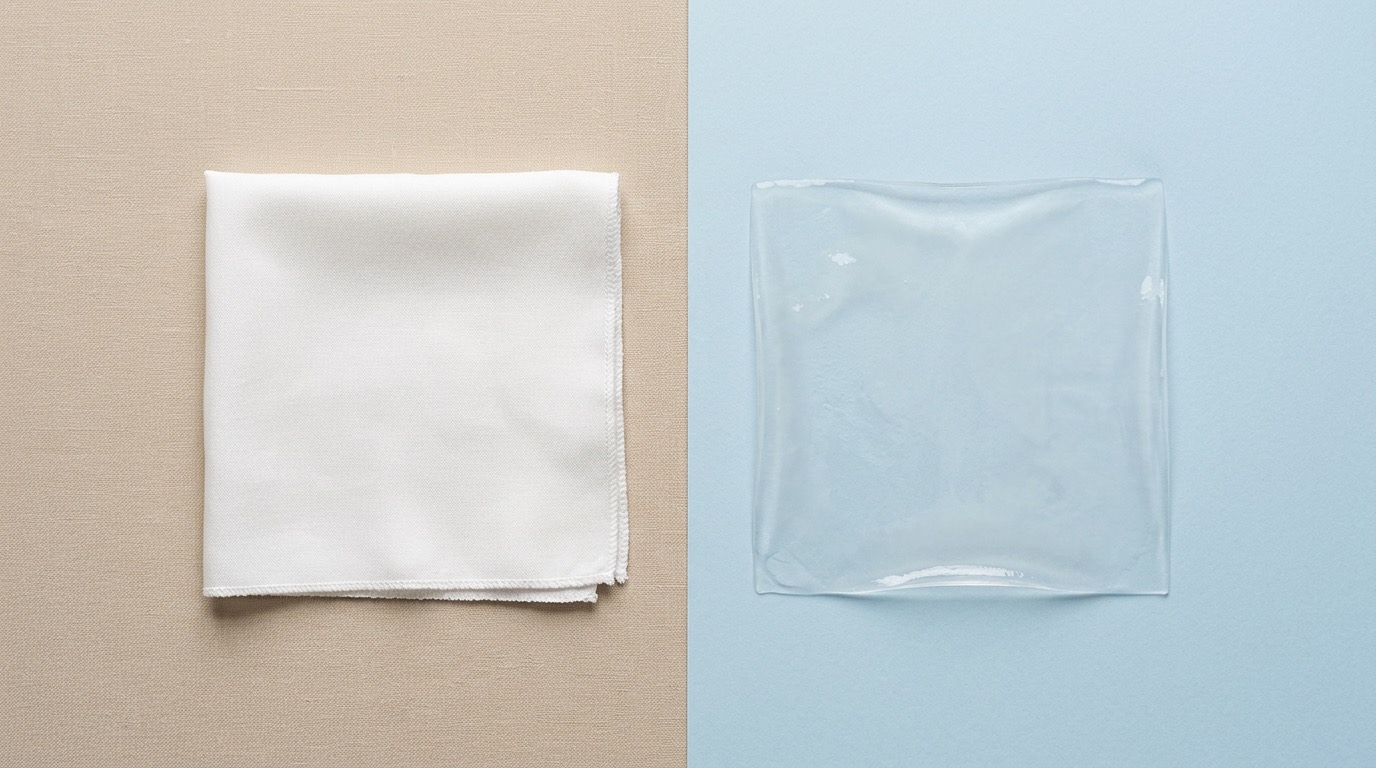
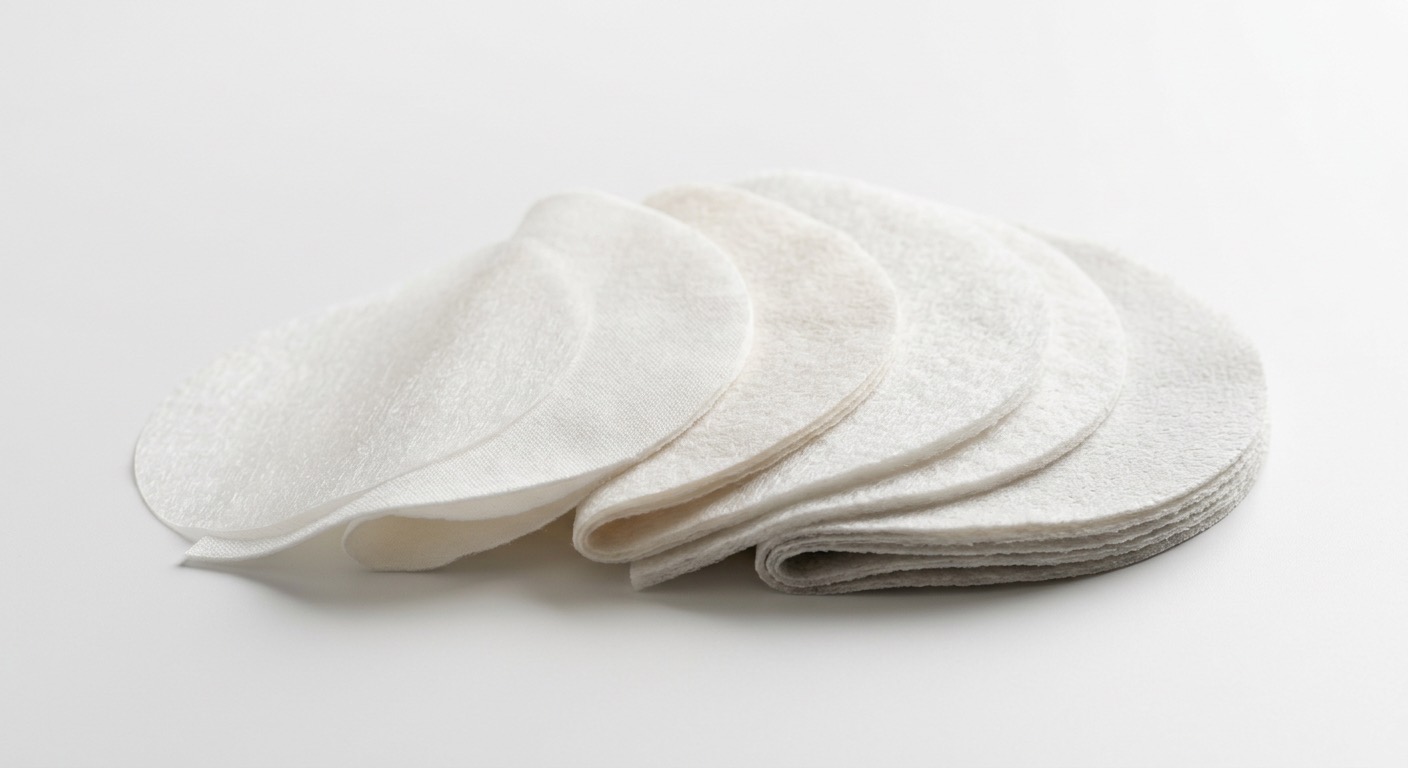
Lyocell, cotton, seaweed alginate and bio-cellulose are displacing synthetic blends. The shift is driven by regulation in the EU and by consumers who read labels.
The new bar is a documented biodegradability timeline — typically 30-60 days in industrial conditions — with third-party test reports, not an unverified claim.
2. Plastic-free packaging, end to end
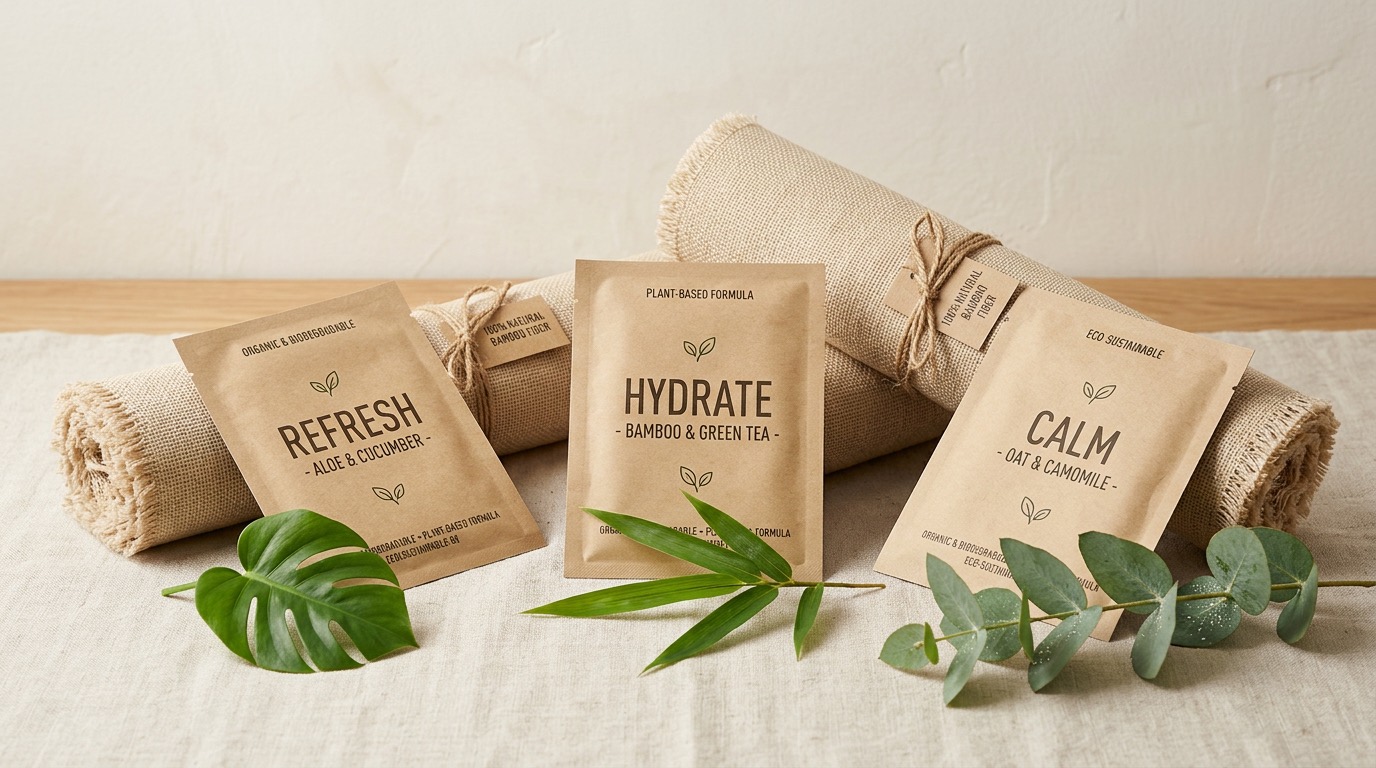
The mask inside may be biodegradable while the pouch, film and carton are not. Brands are moving to paper-based or compostable pouches, soy-based inks and FSC-certified cartons.
The practical challenge is barrier performance: a plastic-free pouch must still protect a wet sheet for its shelf life, so material selection is a genuine engineering decision, not a checkbox.
3. Marine and upcycled materials
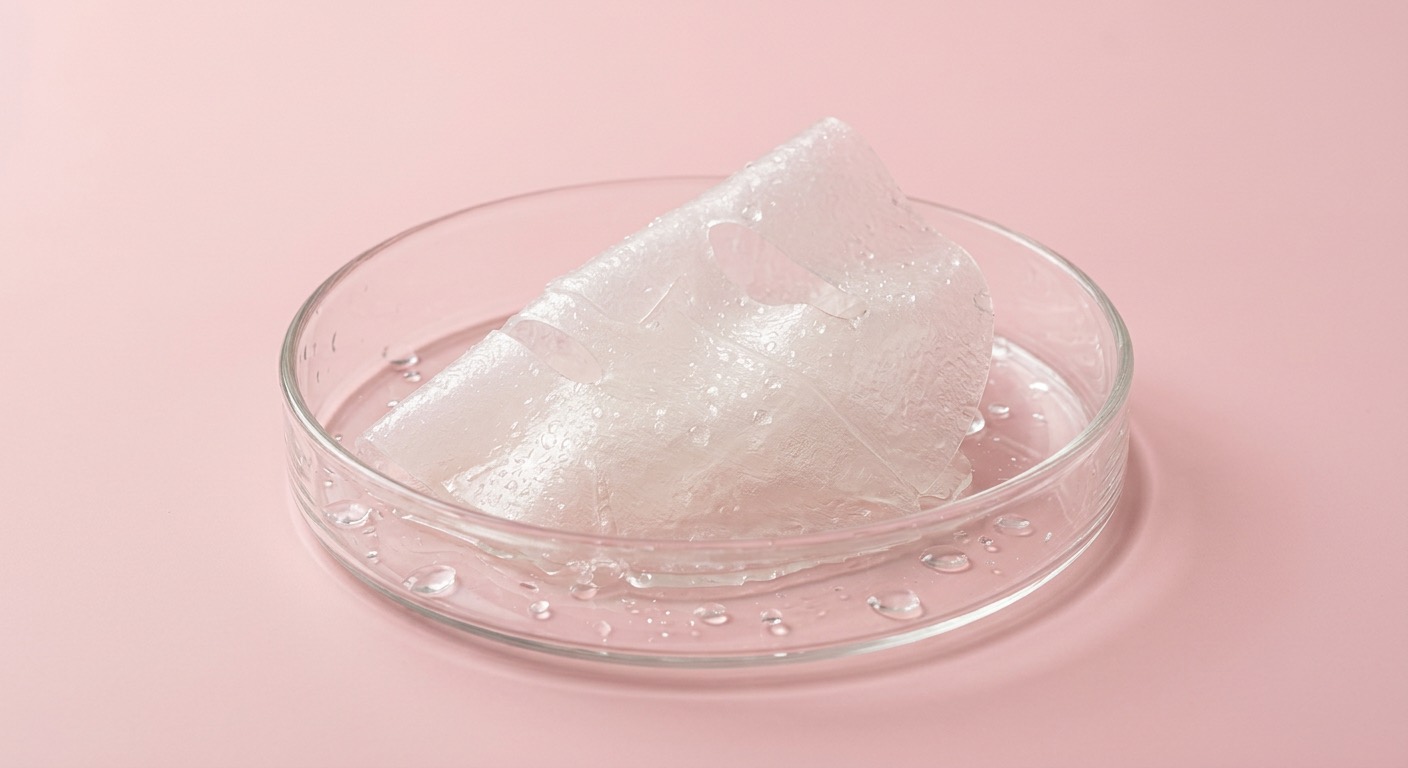
Seaweed, alginate and other marine sources bring a distinctive gel-like feel and a compelling ocean narrative. Upcycled agricultural by-products are appearing in the same conversation.
These materials are also the hardest to source consistently, so early supplier qualification and batch documentation matter more than the marketing story.
4. Concentrated and waterless formats
Concentrated essences, dry or waterless masks and refill systems cut shipping weight and plastic per use. They also extend shelf life and reduce preservative load.
Waterless formats change the substrate spec: the sheet must rehydrate evenly and quickly, which favors materials with high fluid retention.
5. Traceability and certification as proof
Claims now come with paperwork. OEKO-TEX Standard 100, ISO 22716 cosmetics GMP, FSC and compostability certificates are becoming table stakes in B2B buying.
Traceability from fiber origin to finished pouch is the strongest differentiator — and the one hardest for competitors to copy.
Key takeaways
- Biodegradability is now a documented requirement, not a slogan.
- Packaging, not just the sheet, decides whether a mask is truly plastic-free.
- Marine and upcycled materials are compelling but need rigorous supplier qualification.
- Concentrated and waterless formats reward high fluid-retention substrates.
Frequently asked questions
Are biodegradable masks actually compostable at home?+
Most require industrial composting conditions. Ask for the specific test standard and timeline rather than assuming home compostability.
What is the biggest eco weak point in a sheet mask?+
Usually the packaging. A biodegradable sheet in a plastic-lined pouch is only partly sustainable.
Do eco materials cost more?+
Some do, but concentrated formats and right-sized packaging can offset much of the premium.
Which certifications should I require from a supplier?+
At minimum OEKO-TEX Standard 100 and ISO 22716, plus FSC for wood-pulp fibers and compostability reports where relevant.