Why Bio-Cellulose Substrates Are Trending in K-Beauty
From coconut-water fermentation to a second-skin fit, bio-cellulose became the premium mask standard in Korea. Here is what brands need to know before they spec it.
Walk down any K-beauty aisle and you will find bio-cellulose at the top of the shelf. But behind the marketing is a genuinely different material: a fermented hydrogel grown in sheets rather than woven on a loom. Understanding what it is — and what it costs — helps you decide whether it belongs in your line.
What bio-cellulose actually is
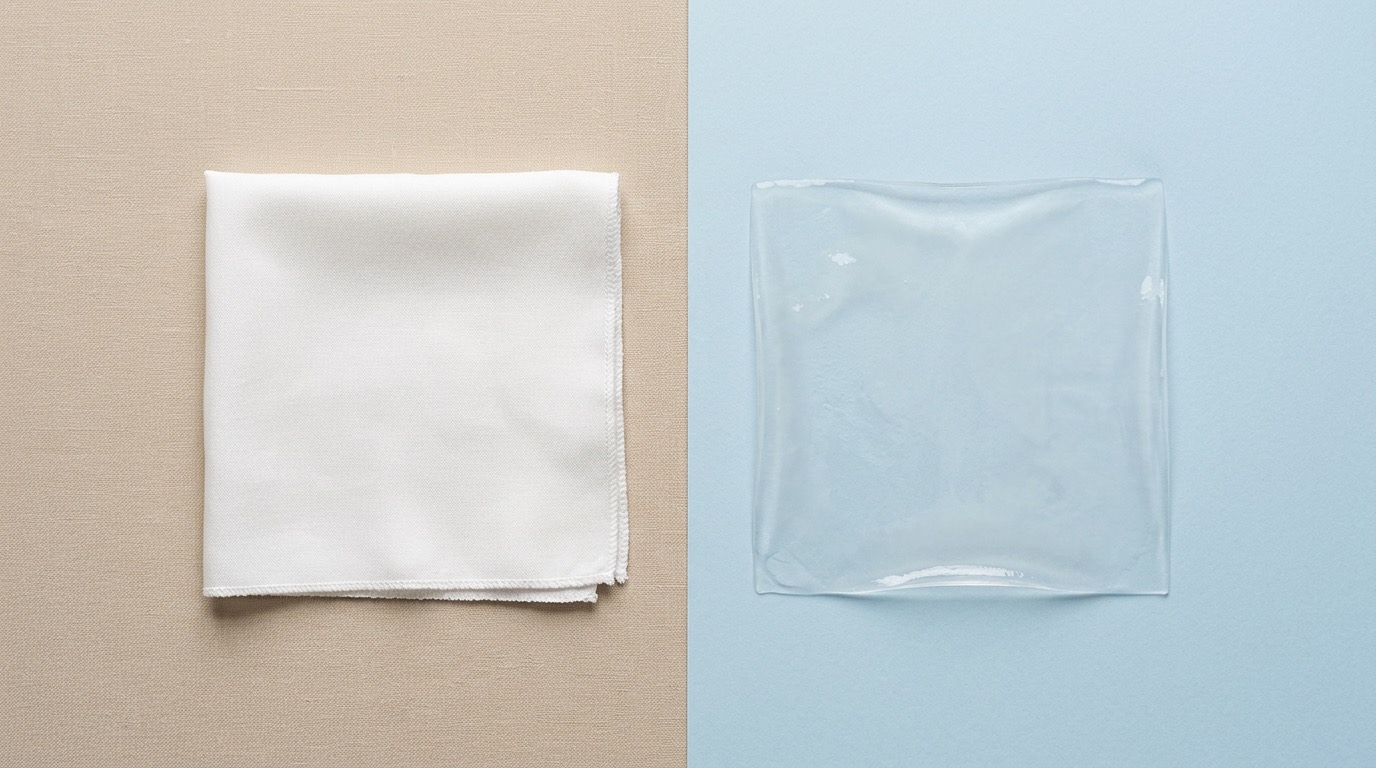
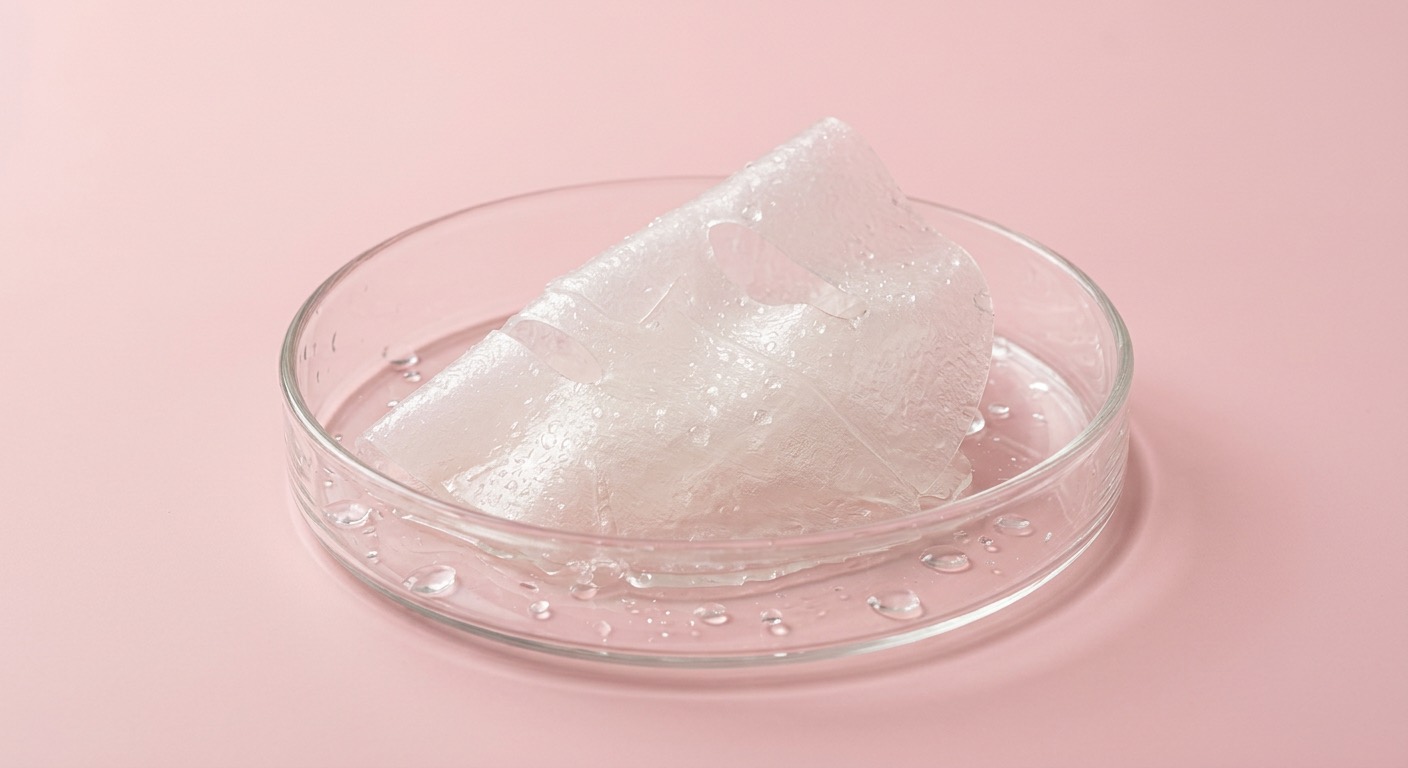
Bio-cellulose is not a plant fiber. It is produced by Acetobacter bacteria fermenting coconut water or another sugar source, which spin cellulose into an ultra-fine three-dimensional network. The result is a translucent, gel-like sheet roughly one-thousandth the thickness of a human hair.
Because the fibers are so fine and so densely packed, the sheet behaves like a hydrated hydrogel rather than a fabric. It holds its shape on contact, clings to the contours of the face without adhesive, and acts as a secondary reservoir of serum pressed against the skin.
Why Korean brands adopted it first
K-beauty ritualized the sheet mask as a daily, near-luxury step, which pushed brands to compete on feel rather than price. Bio-cellulose delivered an experience no woven substrate could match: near-invisible transparency and a weightless fit that stays put for twenty minutes.
The material also photographs exceptionally well, which matters in a category driven by social sharing. A bio-cellulose mask reflects light, looks wet in the best way, and signals 'premium' instantly — a positioning benefit that justifies a higher shelf price.
Where it wins — and where it does not
Bio-cellulose excels for essence-heavy, hydration and brightening masks where a second-skin experience is the point. It is the material of choice for premium lines, gift sets and hero products.
It is a poor fit for cost-led, high-volume basics. The fermentation process is slower and costlier than nonwoven converting, and the material tears easily if handled roughly. For a 10,000-piece trial run priced to a mass market, a well-specified lyocell or cotton sheet is usually the smarter call.
Cost, MOQ and sourcing realities
Expect bio-cellulose to cost several times more per sheet than a woven substrate, with tooling and minimums that favor brands planning a genuine launch rather than a test. Because fermentation happens in batches, quality consistency and lead time depend heavily on the supplier's fermentation capacity.
Ask for the fermentation origin, the sheet thickness in millimeters, and a wet and dry sample. A reliable supplier will quote a realistic lead time and provide batch documentation rather than promising instant scale.
How to spec it for your brand
Start with the shape: bio-cellulose is usually die-cut for a full-face fit, and the die-line matters because the material stretches slightly when wet. Next, define the fill weight — premium hydrogel masks typically carry 25-30 ml of essence — and confirm the pouch material protects the sheet without drying it out.
Finally, ask for a sample run and test adhesion on real skin over the full wear time. If the mask lifts at the edges or dries before the end of the ritual, the spec — not the material — needs adjusting.
Key takeaways
- Bio-cellulose is a fermented hydrogel, not a woven fiber — that is the source of its second-skin feel.
- It is best reserved for premium, hydration-led lines where experience justifies the price.
- Cost per sheet is several times that of nonwoven; plan MOQ around a real launch.
- Always validate wet adhesion and fill weight with a sample run before committing.
Frequently asked questions
Is bio-cellulose biodegradable?+
Yes. It is plant-derived cellulose and biodegradable under industrial composting conditions, and it is naturally plastic-free.
Why is it more expensive than nonwoven?+
It is grown by fermentation in batches rather than mass-produced on a converting line, so throughput is lower and handling is more delicate.
Can bio-cellulose be die-cut to a custom shape?+
Yes, it is commonly die-cut for full-face, eye and lip formats; account for slight wet stretch in the die-line.
What fill weight should I choose?+
Most premium hydrogel masks carry 25-30 ml. Match the fill to the sheet's retention so the mask stays wet for the full wear time.